5 Recruiting Metrics to Measure

by Liz Carey

JONMP7TPGKThere are an endless amount of metrics recruiters can use to determine whether they are recruiting effectively or not, such as referrals per call or email conversion rate.

But for those that don’t have the time to measure every little thing, here are the top 5 metrics to measure the success of your recruiting process: Read the rest of this entry »


Decoding a Client’s Candidate Assessment

by Liz Carey

rlw-uc03gwc-glenn-carstens-petersA few weeks back, we attended a webinar by Dave Baker of the Palmetto Leadership Center called “Human Resources & Corporate Recruiter Relationships,” which was an overview of assessments, effectively coaching clients and candidates, and tips for recruiters from a corporate HR manufacturing perspective.

Working with HR people in the field can present several challenges – one of which Baker noted is having an objective assessment to remove the interviewing bias. Read the rest of this entry »


Contract Placements Add Up!

by Liz Carey

J04BJ1VCGKTemp and contract placements continue to be a source of growing revenue for many members of our split placement network. Even if your firm doesn’t have a dedicated temp division, you can still fill contract roles. While the fee may seem meager compared to a hefty fee on a permanent placement’s yearly salary, the monthly fee for a temp/contract worker adds up, and adds to your bottom line. Read the rest of this entry »


The Exporter’s Guide to the Split Placement Network

by Liz Carey

409rplfbgyIn a recruiting network, you have several different types of recruiters: importers – the recruiter working for clients who has job orders to fill, exporters – the recruiter working with candidates who solely refers talent to importers, and recruiters who do a combination of importing and exporting.

It’s a great system – an importer can simply post their job order and an exporter may find a perfect match by searching their database and sending one along. But it can only work correctly if both sides are on the same page. No importer wants to be spammed by an exporter with 100 resumes of candidates that don’t match what they’re looking for whatsoever, and no exporter wants to waste their time providing quality referrals to someone who doesn’t give any feedback. Read the rest of this entry »


Looking Elsewhere During a Candidate Shortage

by Liz Carey

pexels-photo-29791Hundreds of thousands of IT jobs go unfilled every year, because demand for talent exceeds the supply. The challenge in IT hiring is often that recruiters need to find candidates with both the talent AND the personality to thrive in the role – they want someone who will fit culturally.

So what does a recruiter do when they have a ton of job orders to fill, but their candidate well has run dry? This article  describes a solution that is on the rise with tech firms – hiring veterans. Read the rest of this entry »


What makes a good client?

by Liz Carey

xzhbqor9gmIt takes a lot of time and filled job orders for a recruiter to develop a good relationship with a client – as a recruiter, you must produce results, build trust and be dependable for your clients. But a relationship is a two-way street and it takes more than an employer saying “just find me this candidate” and paying you a fee to cultivate a successful business partnership.

The client has a huge role in getting the job order filled as well, and can’t just take the back seat. They must make time to discuss the requirement with you, provide thorough candidate feedback, have an efficient hiring process, and respect the fee structure.

Here are 5 common problems with clients that recruiters face: Read the rest of this entry »


Siri, can you find me a good candidate?

by Liz Carey

g3w62t63kdRecruiting is being transformed by technology. It wasn’t that long ago that finding a candidate for a client’s job order involved placing advertisements in newspapers and industry magazines. Technology has changed the face of the industry forever – you have to be mobile, social, and on top of these advances. Social networking, apps, and analytics has made recruiting a more efficient process, but we might be seeing technology take even more of a role in finding the perfect candidate for a role, using algorithms – or a piece of software that uses data, skills testing, and intelligence related to a particular industry or niche to match the best candidate to a role. Read the rest of this entry »


4 Ways to Get Your Feet Wet in a Split Placement Network

by Liz Carey

4PMSQNEV8DJoining a recruitment network can open up a world of opportunities for a recruiter – new trading partners to do splits with, access to recruiters and candidates outside of your niche and geographic area, and a group of peers to brainstorm with and bounce ideas off of. But for a “newbie” joining an established network, it can sometimes seem like everybody already knows each other, so how do you make a name for yourself? Here are 4 tips on how to get your feet wet in a split placement network:

1-Where to start

You have to get your name out there. Make it a point to call one network member each week/month. Recruiters are busy and they don’t often have time to keep tabs on and reach out to every new recruiter who joins the network. By being proactive and introducing yourself, you’ll stand out from the crowd and be able to develop relationships with other trading partners faster. You never know who is looking for help from a recruiter who specializes in exactly what you do or where you work. It’s important to reach out by phone, and not just hide behind a computer screen. You might find a position that another recruiter posted online that interests you, but it’s in both of your best interests for you to reach out and connect with that recruiter to find out more about the role and the client before you waste anyone’s time.

2-Communication matters

The most successful trading partner relationships work because both recruiters are open and honest. The recruiter with the job order will likely share every single piece of information about a role, including his client’s information, if he/she trusts the exporter he/she is working with. It’s important for the exporter to get clarity on the role and the company culture in order to completely understand what the client is looking for and find the right fit. The recruiter with the job order will also keep his trading partner informed and “in the loop” of any new developments in the hiring process. By being completely transparent, the two partners will develop a sense of trust in one another, leading to a smooth hiring process and a solid relationship where they know they can turn to each other for help in the future.

3-Meetings and the importance of getting your name out there

Attend meetings and trading group calls so people can put a face and/or voice to your name. The more people hear from you, the more likely they are going to think you are active and reliable, and might be able to help them. When you go to meetings, you learn an incredible amount, but you also learn more about one another. Recruiters have limited time during the day to have in-depth conversations, so by going to the meetings, you get to know someone’s style a bit more and learn a bit more about their clients or things they’re hoping to do. Personal connections really do help.

4-Find a peer coach or mentor

If your network offers peer coaches or mentors, sign up for one immediately. They know who the “players” in the network are, and will be happy to help connect you. This business isn’t the easiest in the world, and it helps to have someone you can ask questions to or bounce ideas off of — maybe you can learn from them about a certain type of technology, or about their experience working with a particular affiliate. Everybody works differently, so it’s nice to hear firsthand how someone has worked with different people in the network.

How did you get your start in a split network?

image of explore membership button


Preventing the Process of Counteroffers

by Liz Carey

E4PSRGAB8YOn a recent trading group call, Scott Love of GreatRecruiterTraining.com gave a presentation on counteroffers. For a recruiter, it is crushing to have a candidate who’s already accepted your client’s offer renege and accept a counteroffer from their current employer. You saw the light at the end of the tunnel, the placement fee was almost in your pocket, and now it’s back to the drawing board. What Scott Love told recruiters was: an easy way to keep candidates from taking counteroffers is to prevent the process. But how can you prevent it?

Have a conversation with the candidate — not the night before they’re putting their notice in, but earlier in the process, before or after the first interview. It behooves a recruiter to assess the risk of any candidate they are considering presenting to their client considering a counteroffer. Read the rest of this entry »


Five great quotes for recruiters

by Liz Carey

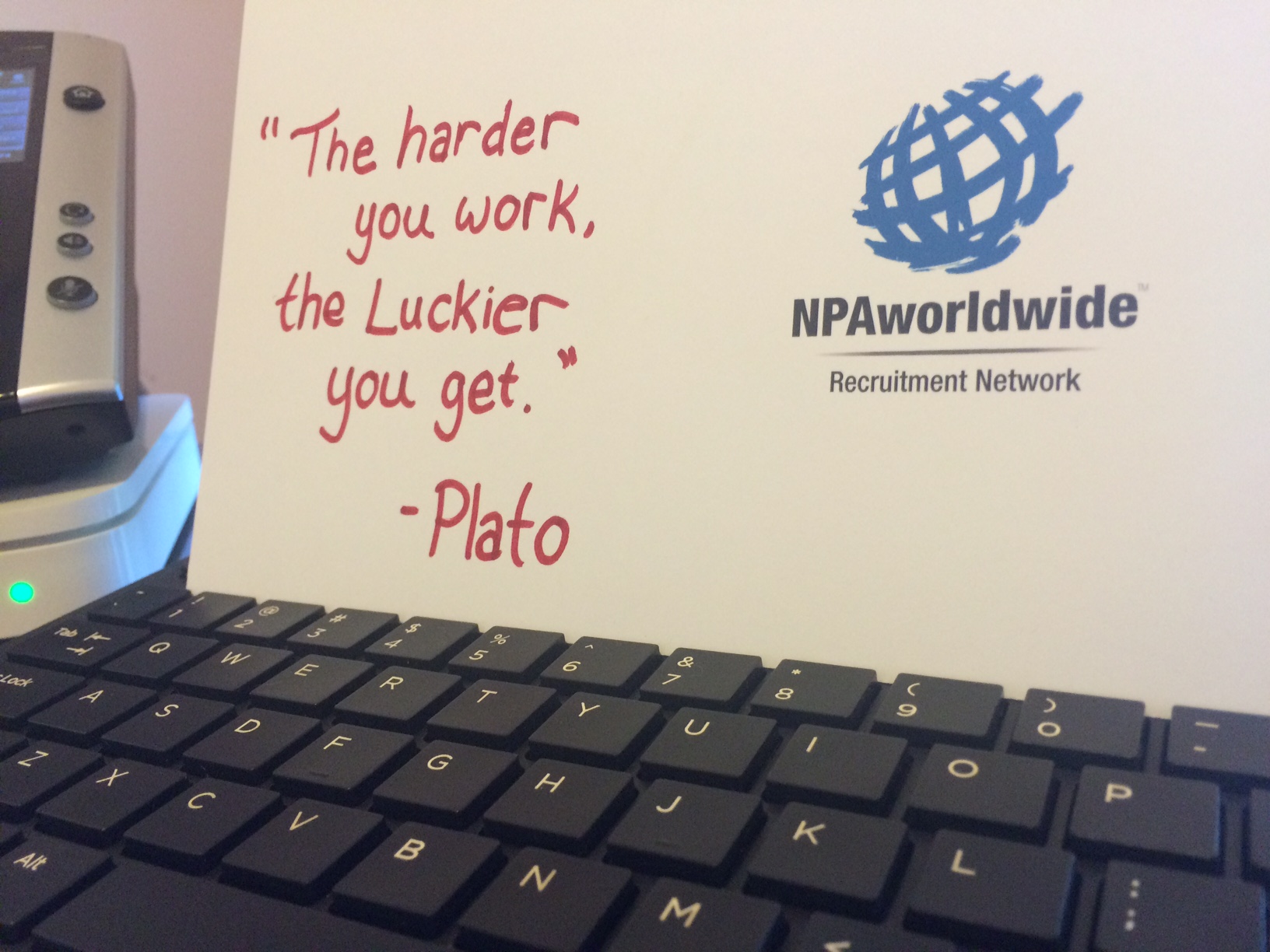
IMG_9872I recently read a blog about the five best quotes for recruiters. It included thoughts from Apple founder Steve Jobs to Chinese philosopher Confucius that could be applied to the recruiting world. It inspired me to create my own list of five of my favorite quotes, and how they can be applied to the recruiting world.

1. The harder you work, the Luckier you get. – Plato
Recruitment is a tough business, and it takes a lot more work than just posting a job order and crossing your fingers. Success takes time, effort and perseverance – not only in getting job orders from clients by building a solid relationship over time, but gaining trust and a good reputation among candidates by providing them with timely feedback and coaching. Read the rest of this entry »


Please ensure Javascript is enabled for purposes of website accessibility