7 Workplace Forecasts Affecting International Recruiting

by Terri Piersma

What will the work environment look like in the next 10 years? In a recent study by Apollo Research Institute (ARI), 65% of employers and 75% of college students felt that today’s job skills would be suitable 10 years from now. Apollo’s research suggests otherwise.

According to ARI, three key changes affecting the workplace in the next 10 years involve technology, globalization, and demographics. ARI stated that as organizations become flatter and more socially networked, workers will need to demonstrate new forms of collaboration and productivity. International recruiting will definitely be affected by these changes. Read the rest of this entry »


Global Recruiting Update: Korean Economy

by Veronica Blatt

Today’s post is courtesy of Joshua Ro with People Consulting Group in Seoul, Korea. People Consulting Group places senior executives in manufacturing, information technology, consumer products, banking and finance, telecommunications, logistics and distribution, professional services, entertainment, and fashion. Joshua serves as a member of the NPA Board of Directors.

In the midst of global business attention on Asia, it seems like Asian economies are doing relatively better than other regions of the world. I have been noticing people are eyeing Asia more than before for new global recruiting opportunities and to expand their market shares.

China was the strong business driver and the center of business opportunity in Asia and many parts of the world for a while covering most of the business sectors. However, due to the recent downturn of the global economy from the U.S. to the Euro zone, it definitely has affected Asian business markets.

Korea’s economy had been steadily driving the business in general and seemed promising in many different occupational and industry sectors. Starting at the end of 2011, economic forecasting has been somewhat negative due to several reasons:

  • U.S. and Euro zone financial crisis, which will affect trade activities
  • Banking and finance has been in decline, facing high risks both in corporate financing and the consumer sectors
  • Construction industry has been down due to the excessive supply over demand
  • Consumer and retail industries facing slower sales
  • Luxury industry side was booming, especially in the imported car industry where the general index  seemed positive, yet the new demands were mostly coming from younger generations using bank loans instead of cash for purchasing.

And surely from the beginning of 2012, slowly the Korea economy began to face a downturn which has impacted businesses in all sectors. Layoffs have been increasing and many large corporations are still undergoing restructuring processes. Global recruiting opportunities have been limited.

A few trends have been noticed during 2012 in Korea’s recruitment industry, which are:

  • Hiring activities have slowed down and no particular industry seemed promising
  • Hiring process has gotten longer
  • Downward pressure on commissions from clients
  • Client expectations have gotten much higher in candidates, yet the packages offered are limited

There are a few positive indicators. Large Korean conglomerate companies have grown their interest in green energy, wind energy, specialty chemicals and especially these days on the overseas power plant projects. Over the coming years, more demand for global recruitment for foreign professionals is expected. These professionals are in high demand and clients are ready to offer high and great packages. This demand is mostly being seen in very small niche sectors and industries, where it is extremely difficult to locate available candidates.

Many clients are opening up for the hiring of foreign professional talent in recent days. This is actually something that should have been seen a long time ago but has been slow to open up.

In 2013, we look for a turnaround in Korea’s economy which will create better global recruiting opportunities for clients and partners.

Interested in global recruiting? Download NPA’s free white paper, 7 Trends for Global Recruiting.


Hiring Trends for Independent Recruiters

by Veronica Blatt

This week I read an interesting article by Jason Warner, Founder at RecruitingDash, about trends that are creating a challenging landscape for employers and independent recruiters. Economic factors, candidate behaviors and increasing social media usage is reshaping the way independent recruiters connect with candidates and vice versa. According to Jason, “There’s a bit of a perfect storm that has happened as a result of all the trends that have played out in the last few years.”

Below are Jason’s three key trends. I’ve also included solutions for recruiters to ensure you present your candidates with the best and most consistent client information possible. Read the rest of this entry »


Will Semantic Searching Reshape Global Recruiting?

by Veronica Blatt

Today’s installment is courtesy of guest blogger Brock Vaughters. Brock is an Account Manager with Monster®, the worldwide leader in successfully connecting people to job opportunities. Monster Worldwide, Inc. (NYSE:MWW), is the global leader in successfully connecting job opportunities and people. Monster uses the world’s most advanced technology to help people Find Better, matching job seekers to opportunities via digital, social and mobile solutions including monster.com®, our flagship website, and employers to the best talent using a vast array of products and services. As an Internet pioneer, more than 200 million people have registered on the Monster Worldwide network.  Today, with operations in more than 40 countries, Monster provides the broadest, most sophisticated job seeking, career management, recruitment and talent management capabilities globally. For more information visit about-monster.com.

Google’s doing it! Apple’s doing it! Microsoft’s doing it! Oracle’s doing it! Are you doing it? Wait… Wait… What is everybody doing?

Well, it’s called semantic searching. It is hard to explain in words (because it doesn’t use keywords), but it uses the concepts behind words – and the context of those words in relation to every other word – in order to search information and return results. If that explanation is still a little fuzzy, let me give you an example.

If a recruiter were looking for a programmer’s resume, using semantic search, he could simply type in the word ‘programmer’, and the system will automatically find matching concepts like Software Developer, J2EE Engineer, and .Net Technical Lead,  without having to construct a complicated Boolean string.
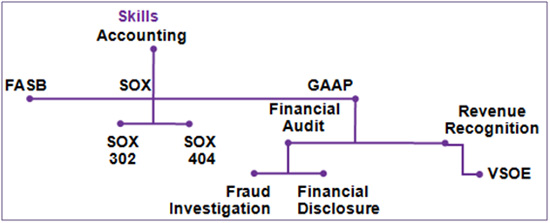
At Monster, with our Power Resume Search, the best part about using semantic search is that you don’t have to understand the technology to use it effectively. Maybe the most surprising aspect of semantic search is that it lets you describe who you’re looking for, almost as if you were speaking with a networking contact who knew all the top candidates out there.

So let’s answer the title question of this post, “Will Semantic Search Reshape Global Recruiting?”

Do companies still need recruiters when semantic search is available? The fact is that most employers who have been using recruiters will find that these human experts will remain essential to the sourcing, recruiting and hiring cycles.

The goal with any advancement in technology is to improve the process and make it user- friendly. The key here is the word “user.” Semantic search will allow global recruiters to do what they do best, which is develop relationships, screen out candidates that look good on paper but aren’t a great fit for one reason or another. Remember that semantic searching using Monster’s Power Resume Search will bring the best candidates to the top of the list, but then the best recruiters take that list and make actual placements. At Monster, our goal is to give the best recruiters the best tools to find that best candidates. Recruiters are a big part of this process.

How much time would you save if your recruiters had a tool that could:

  • Recognize a candidate’s breadth and depth of experience?
  • Identify job hoppers from long-tenured employees?
  • Distinguish “must have” vs. “nice to have” skills?
  • Assess a candidate’s context of experience (i.e. 3 months vs. 10 yrs)?
  • Score a candidate based on recent vs. outdated skills?
  • Automatically identify related skills?
  • Understand the latest industry acronyms?

Monster Power Resume Search uses Monster’s patented 6Sense technology to do all of these things — at lightning speed. How much is your time worth?


NPA Is a Global Recruiting Cooperative

by Dave Nerz

I am frequently in a position where I need to describe what NPA, The Worldwide Recruiting Network is all about and how it works. One of the greatest challenges is describing the structure of NPA as a recruiting cooperative, and explaining member-ownership. So I started to doing some research on cooperatives, including a chain of independent recruiters and other  recruiting cooperatives and here is some of what I learned…

  • 2012 is the International Year of the Cooperative. No that does not mean you will find it right after the Year of the Rat or the Year of the Boar on a menu at a restaurant. It does mean that the United Nations believes that “Cooperative Enterprises Build a Better World.” That is the slogan for this year long campaign.
  • There are tens of thousands of co-ops around the world, no others focused on split fee recruiting.
  • Co-ops are owned and democratically controlled by their members. NPA is a member-owned recruiting cooperative.
  • Service to members is prioritized over profit.
  • Shared services co-ops provide services to meet the needs of their members. This sometimes includes joint advertising and marketing, offering training and educational activities, and negotiating prices with vendors.
  • Some examples of cooperatives include:
    • Ace, True Value and Do it Best hardware chains. These chains are owned by more than 13,000 independent hardware stores.
    • Best Western is the world’s largest hotel chain with more than 4,000 independently operators in 80 countries.
    • NPA, The Worldwide Recruiting Network…which is really a global recruiting cooperative.

5 Ways Split Placements Can Benefit Your Recruiting Firm

by Veronica Blatt

NPA has been in the business of fostering split placement opportunities since 1956. Obviously we are big believers in splits, since that’s the very reason for our existence. If you haven’t considered integrating split placements into your business model, here are some reasons you should:


Read the rest of this entry »


International Recruiting News Round-Up

by Veronica Blatt

A Split Fee Network Organizes the Playing Field

by Dave Nerz

I’ve been reading some interesting blogs lately on how recruiting compares to sports. Barb Bruno had an interesting one just a few days ago comparing recruiting to golf.

It got me thinking about where a split fee network might fit into the comparison of recruiting and sport. My conclusion is that networks function much like sporting leagues. They group like-minded recruiters together and organize the playing field for participants with various levels of tools and rules. Read the rest of this entry »


Membership in a Global Recruiting Network Is One Way to Reduce Cost

by Veronica Blatt

I recently saw a “pin” on Pinterest about everyday ways to save money. The list included things like hang your laundry to dry, use coupons, re-evaluate your car insurance, try DIY projects, make your coffee at home each morning and bike and walk more and drive less. The article got me thinking about ways recruiting firms can reduce their costs. I did an Internet search about ways to reduce or save on recruiting costs and came across a post by SilkRoad. I’ve included a few tips below that are both practical and relatively easy to implement.


  • Improve retention – You don’t have to spend money hiring new people if your existing good employees stick around. Study retention, track it, and continuously work to improve it.
  • Stay on top of new sourcing technology – Let’s face it, sourcing is your mainstay. A continual investment and investigation of the latest tools and techniques will pay off.
  • Use social recruiting – Twitter, Facebook and LinkedIn are all free ways of building a brand and seeking candidates.
  • Assess value, not cost – One of the biggest recruiting costs is hiring poor performers. Assess the quality of the hire and go the extra step of asking managers to put a dollar amount on the difference between top, average and poor performers.
  • Join a global recruiting network – This tip wasn’t included on SilkRoad’s list but I think it’s a good one. Instead of hiring additional employees with no guarantee of performance, consider joining a global recruiting network. Recruiting networks, like NPA, allow you to make money without the overhead of managing and monitoring your employees. Plus, you only pay those who perform. Can’t beat that model!

See the remaining 6 tips to reduce recruiting costs at SilkRoad’s website. In what ways does your recruiting firm cut back on cost?


Whatsapp Can Be a Useful Tool for Global Recruiting

by Veronica Blatt

Are you doing any global recruiting? Have you ever wished for a quick and inexpensive way to reach out to clients, candidates, or other recruiters? Recently I was made aware of a mobile phone application, Whatsapp, which is basically an IM service for your cell phone. It’s available for iPhone, Android, Blackberry, and Nokia phones. Whatsapp uses your phone’s Internet connection and even supports audio and video transfer. Oh, and did I mention you won’t pay international text fees?

That’s right. Free international texting.

I realize there are lots of other communication tools, but they tend to have limitations in terms of platform support, accessibility, cost, and speed. Whatsapp avoids these issues by making use of the same data plan you already have on your phone. Here are some ways you can use Whatsapp in your global recruiting efforts:

  • Confirm interviews with candidates (or clients) without having to rely on email, which may not be received on time
  • Reach out to global recruiting partners for communication updates such as, “Thanks for forwarding that resume. I got it.”
  • Connect with clients for issues that are time-sensitive and/or happen outside normal working hours.

People are relying more and more on their mobile devices, and are connected to them from very early in the morning until very late at night, including weekends. In our global recruiting network, we are continually frustrated with delayed responses due to the huge time zone differences. It’s especially frustrating when the weekend has already started in other countries and by the time a response is seen, it’s already someone else’s Tuesday.  Using a tool like Whatsapp can help get faster answers to time-sensitive questions.

For Android users (including me) Whatsapp is a free download. iPhone users pay US$.99 to download the app. After a free one-year trial, the service costs a whopping US$1.99 annually. Oh, and Whatsapp doesn’t sell ads.

What’s your favorite app to assist with your global recruiting activities?


Please ensure Javascript is enabled for purposes of website accessibility